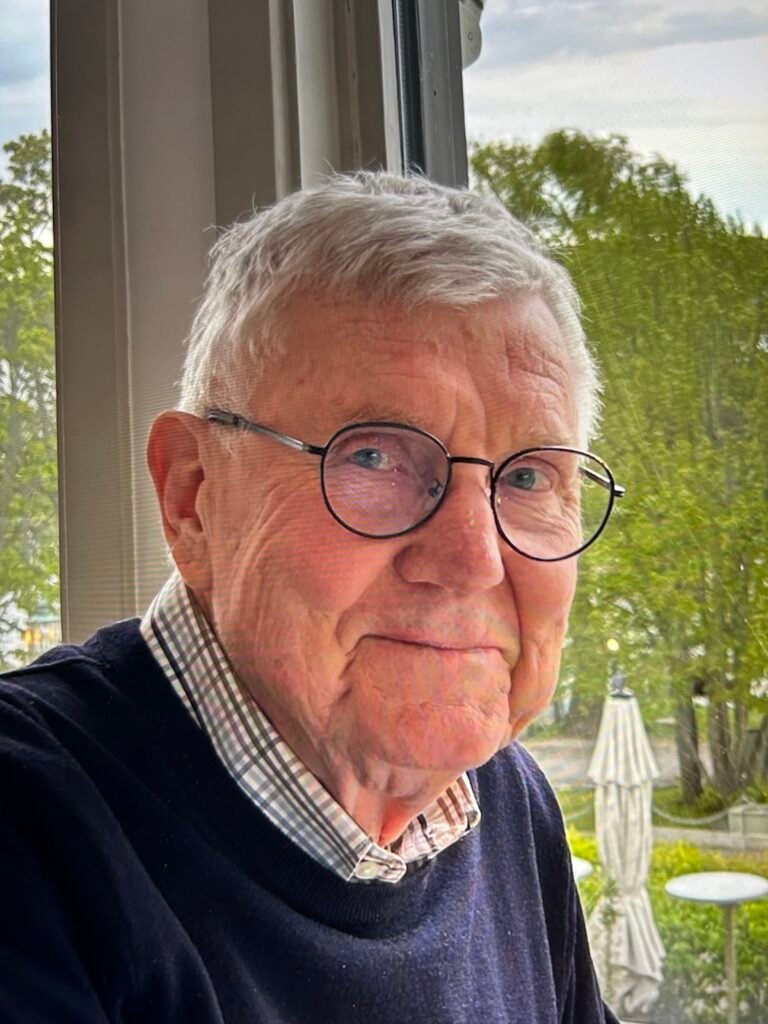
Per Olof Nordström: Greetings from an ex-employee in Sweden

Per Nordström, who worked at FSL in the 1960s as a stereo operator in the Plotting section, has sent in memories of his time in the UK:

Dear all,

This year your website once again gave me the pleasure to watch photos from the Fairey reunion. Ever since I worked at Fairey Surveys more than 60 years ago I have had rather close contacts with many of my former colleagues and I have also participated in the reunions a couple of times. Your website gives me a good opportunity to be kept abreast with what is going on.

At that time in the sixties, I worked in the Plotting section as a stereo operator. The business was good and the production was enhanced through shiftwork. My machine partner on the other shift was Mike Neighbour who later moved to Rhodesia as it was then called. We met several times both in Africa and Sweden. He got some special allowances from some source that made it possible to make study tours to Sweden for technical purposes. After many years I lost contact with him, but he might have returned to the UK.

The supervisor in the Plotting section was Bill Clark (Bix). We lived quite close to each other, and I became a frequent visitor in his home in Belmont Park Avenue. He used to say that ‘if you are bored with life let’s be bored together’. We had a common interest in music which we listened to in his lovely living room. Since he later moved to Edinburgh the contacts became more sporadic, but together with some other former colleagues I visited him there in connection with his 90th birthday many years ago.

My closest friends throughout the years have been Peter Forsey and John Parfitt who both came to see me in Sweden with their wives on different occasions. When I took part in the reunions I stayed with Peter and Ruth since they still lived in Maidenhead. Since they are not around anymore my only remaining friends are now John and Anni Parfitt with whom I still have on-going email correspondence.

There are of course many others I remember very well from that time more than 60 years ago but whose names I cannot include in this short message. It was however a very friendly and nice atmosphere in the company which made such a great impact on me, and I enjoyed working there very much. I remember with emotion the father-like personality of the Production Manager Tom Phillips who walked around the engineering and said ‘good morning’ to everybody every day. When we had lunch together in the canteen at one time, he asked if I had yet got any girlfriend. When I said no, he got a bit upset and asked why he had to do everything himself and then shouted to Sarah who worked in the canteen if she could investigate this matter and do something about it.

It is nice to see from the photos that one of the directors is still around – Lawrence Scott. Some 20 years after I left the company, I attended a mapping conference in London and suddenly ran into W.P. Smith. Much to my surprise he said he still remembered me. He was then the head of Ordnance Survey.  Another person from the management team whom I should mention is of course Bill Cheffins. He was the first person I met when visiting Fairey the first time and he also helped with contacts to seek employment. The demand for stereo operators was high at the time, and it was quite easy with my background from similar work in Sweden. I also remember him as a technical genius. Since he was a keen folk dancer, he took me to one of those festivals in St Albans at one time. I remember that his kids came along as well.

At one time I bought a car from somebody in the company. If I remember correctly his name was Stan Vicker or something similar. It was an Austin A30 which I had great fun with. Perhaps I should have kept it. It might have been worth a fortune these days.

Personally, I stopped working on the technical side after a while when I got back to Sweden and was educated in economy and eventually became a CFO in a company owned by the government which was engaged in real estate cadastral matters, mapping and consultancy services in various parts of the world. I am now retired since nearly 20 years at the age of 84.

I have been back in Maidenhead on several occasions and have thus seen the transformation of the town. It is hard to remember much of how it looked like this long time ago, but I suppose that is what happens when urban areas are expanding. The time in the UK had a great impact on me. I was in my twenties and quite receptive in my mind to everything including the British way of life and has ever since felt a bit ‘half-British’. I at least follow the somewhat turbulent political life and much else that turns up on the news from your part of the world. 

With best regards to everybody reading this,

Per Nordström
Jan Karalus in Bangladesh

This is an article written by Jan and published in the Bengal Times, sent by James Kavanagh of RICS.

BENGAL TIMES

Jan Karalus

In September 1962 as a newly qualified surveyor, Fairey Air Surveys assigned me to their ground control party in East Pakistan at the start of their second survey season. The task may have been a standard one for the company, which had been founded in Bengal some forty years previously, but to a twenty-three year old who had never before travelled outside Europe the adventure was total.

After more than twenty four hours of travel from London, the Lockheed Constellation landed in Dacca in a late monsoon downpour through which we struggled in an ancient taxi to the Shahbagh Hotel, the best in town, and I subsided gratefully onto the mosquito netted bed, underneath the ceiling fan, to recover from the journey. Even the large gecko which was observing me from the ceiling gradually failed to keep me awake.

That was a time when the survey season was a reality which could not be overcome by the technology of the day. Last year, whilst engaged in petroleum development and exploration in Bangladesh, seismic surveying continued throughout the year, albeit with reduced productivity in the monsoon, thanks to the availability of GPS and vessels of a type which just were not available then. In 1962 our first task was to visit the previous season’s base camp area to assess the flood condition and then to reestablish the camp.

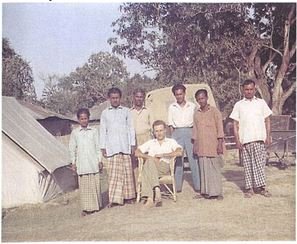
For the first six weeks as the countryside dried out I worked in base camp preparing aerial photography for our Bengali surveyors to control and learning the important art of serious camping. This had changed little if at all since the days of Empire. Various sizes of standard Indian Army pattern cotton tents, with or without fly-sheets were issued according rank and status: 12ft square with 3ft walls and 6ft ridge plus fly-sheet with bell-end for bathroom was top of the range for an expatriate surveyor. The number of labourers who crowded into a tent of that size was amazing and they did not have a fly-sheet. Power for lighting and cooking was provided by paraffin because it was available in local markets, and base camp even boasted a paraffin refrigerator.

As soon as conditions permitted I was put to the real test of professional competence: to set up my own camp on the other side of the Jamuna River (some 13 miles wide) and observe a line of geodetic levelling along the Tangail Mymensingh road. I was on my own and wondered whether I had bitten off more than I could chew. Suffice to say that with the determination of despair and the help of my loyal Bengali staff, most of whom had already spent the previous season with Fairey and knew the form, everything went perfectly. Even the levelling closed. Moreover, I learned not to camp in the romantic shady gardens of a mined Zamindar’s Palace ever again. It wasn’t so much the shadowy serpents that glided through the camp in the evening that gave cause for concern they were only after the frogs who were after the jute moths who were attracted by our Tilley Lamps but the sloughed cobra skins which I would find in my tent most mornings, where their former owners had sought escape from the cold night air. My nightmare was that I might be called upon to administer the intravenous snake bite serum which the four expatriates each carried to administer to any one of our 500 local staff in case of need. Fortunately for our staff, the need did not arise in my camp.

Having proved my mettle, the party chief then gave me the prize ground control of Belkuchi district. Although Bengal is one of the most densely populated areas in the world, communications have always been difficult because of the mighty rivers which crisscross and shift and flood and flow seasonally in different directions with a force which can destroy whole towns and transport infrastructure. In 1962/63 the Belkuchi survey area was isolated even by Bengali standards. It was surrounded by major rivers on three sides and there were no motor roads or motor transport in the whole district.

A bullock wagon trail ran from the railhead at Sirajgang, southwards for about 30km through Belkuchi town to a ghat on the Baral River where country boat ferries plied the 1 mile crossing to Pabna District and the nearest motor road. The east-west extent was about 20 km. I camped at a village called Samaspur because it lay midway along the north-south artery and because it boasted a magnificent banyan tree in whose cool shade a small market was held twice a week and which also accommodated a chaikhana open all hours to travellers and campers and serving lovely hot sweet tea (bay leaf optional).

For five months I controlled the operations of 5 photo levelling teams and 6 photo interpretation teams. With two Land Rovers and trailers I would move the teams’ camps, prepare their work assignments and check the results. Sundays were special. I would take the week’s survey results and empty petrol drums to the Southern Ghat, 15km and four hours away. After checking that the party chief was on the other side (and vice versa) I would hand the survey package and empty drums to a boatman and the party chief would despatch a boat with full drums of petrol and any other supplies previously requested. These Sunday sightings across the river were the closest contact that I had with the outside world. Then it was four hours of dusty and difficult driving back to camp, a hot bath in the tin tub and a cordon bleu dinner cooked by Anthony on his two ring burner complete with a paraffin can converted into an oven. The dinner table outside the tent entrance was formally laid with starched table cloth, silver and napkin and any British passerby might have mistaken the scene for a Camp Coffee label.

As most of the local staff were muslim, Friday was observed as the weekly day of rest and any who were in Samaspur on that day would join the Land Rover trip to Sirajganj. While they went to market I would visit the barber and, in the afternoon, we reserved the back row of the local cinema for the matinee performance. This small treat, which cost only 3 rupees for the whole row, created good will and loyalty out of all proportion to its cost. The films were terrible.

It may be that the first expedition, like a first love, is the most memorable. Certainly Bengal made an enormous and lasting impression on my life. The population pressure, poverty, disease, natural disasters, dust and, in my case, cultural isolation, were never to be equalled again. And yet the prevailing memories are of the beauty and fertility of the countryside, and the hospitality, friendship and, above all, the resilience of the people. I returned to Belkuchi in 1975 and the isolation of the area was again emphasised by the fact that it harboured the last pocket of smallpox in the world. In June 1998, the Prime Minister of Bangladesh opened the Jamuna Multipurpose Bridge. Its western landfall is by Samaspur which will now become the Clapham Junction of Bangladesh.

End of season Group photograph, Jan Karalus & team, June 1963 E. Pakistan (now Bangladesh)

Jan Karalus RIP

News came today from Jan’s daughter, Victoria Phillips, that Jan passed away on Sunday 28th June 2026.

Victoria sent this message:

“Jan Karalus passed away peacefully at home in the early hours of Sunday 28th June 2026 with family by his side. Jan was born on 7th June 1939 and had recently celebrated his 87th birthday. A Land Surveyor with Fairey Surveys from 1961, he remained with the company for many years and always remembered his Fairey colleagues and projects with great fondness. Jan’s funeral has been arranged for 10:45am on Friday 17th July 2026 at Reading Crematorium, All Hallows Road, Caversham, Reading, RG4 5LP. The funeral will be followed by refreshments at The Crown, Playhatch, Reading, RG4 9QN.”

Jan’s family would very much appreciate seeing Jan’s old friends and colleagues there.

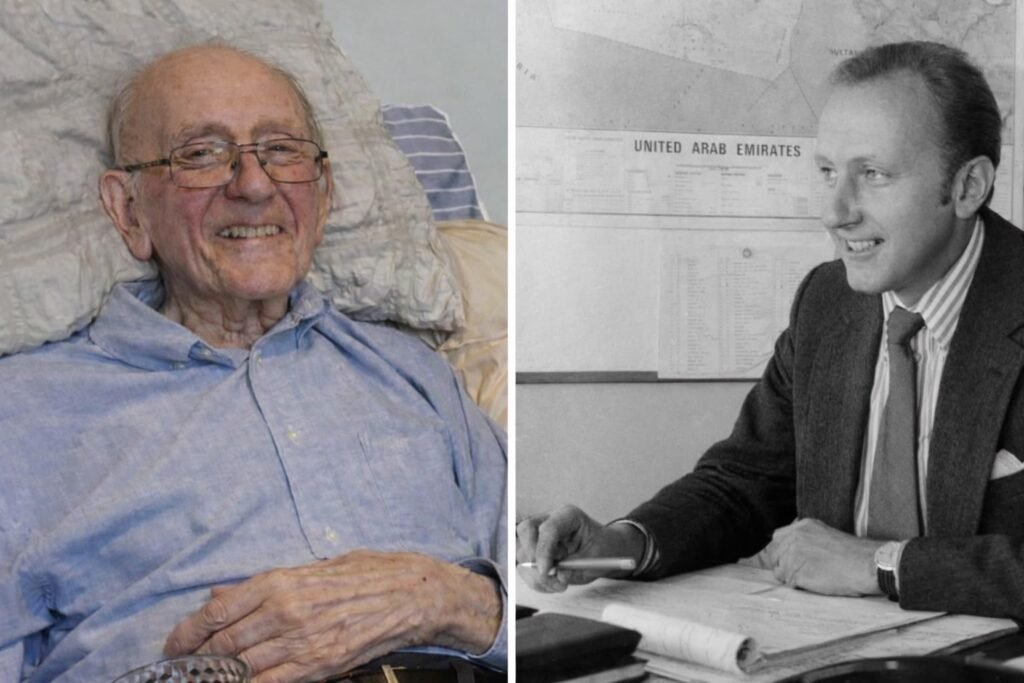
Jan Karalus: 2026 and 1975

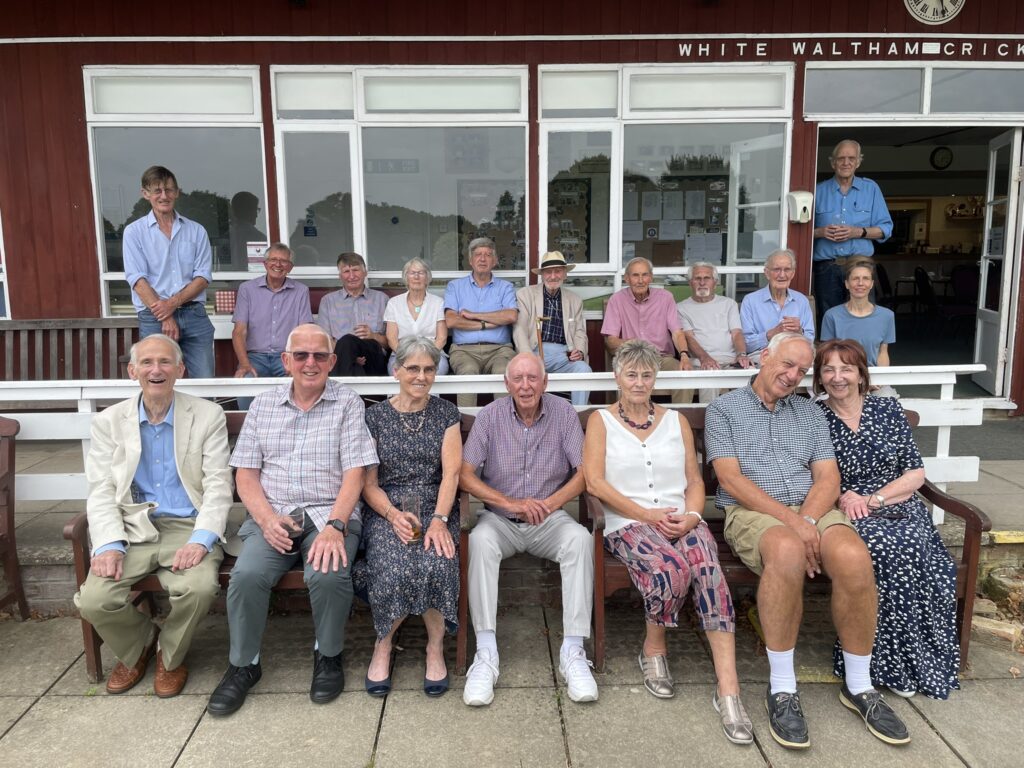
Reunion 2025: photographs

Photographs from the reunion at White Waltham Cricket Club on Friday 25th July.

Sue Dunstan’s husband Kevin sadly passed away on 26th June. His funeral was on the same day as the reunion, so we were missing some of our regular attendees (see apologies list for details).

Scroll down for the indexed photograph and the names.

Photograph by Tony White

Right click and select ‘open image in new tab’ for a larger image.

Apologies list (opens in a new window):

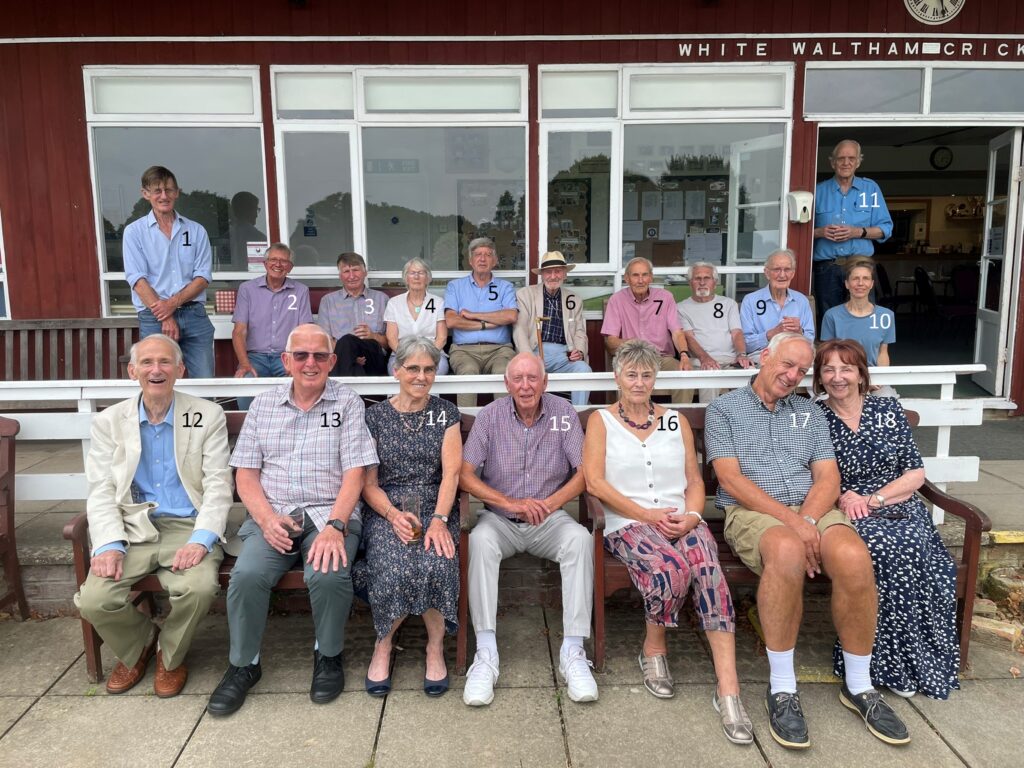
Reunion photograph with numbered index.
To see a full size version, right click on the photograph and select ‘Open image in new tab’
To download it, right click on the photograph and select ‘Save image as…’
1 Richard Groom10Elizabeth Scott (Lawrence’s daughter)
2Derek Minter11Les Ritson-Smith
3Dave Padgett12John Wheeler
4Gillian Wallace (Edwards)13John Holton
5Rob Wallace14Alison Holton
6Victor Brown15John Tompkins
7Jerry Willson16Carol Tompkins
8Ken Fostekew17Dusty Miller
9Lawrence Scott18Brenda Miller

To download names, click here

Jean Fostekew: In memoriam

Jean’s funeral was on Wednesday 27th November 2024, and the chapel at Reading Crematorium was packed.

Ken’s tribute was read by the celebrant, Alison Scott, and Jean’s son Ray read his cricket-inspired eulogy. Both are attached below, along with the order of service.

Family, friends and old colleagues from the Berkshire Museum of Aviation and Fairey Surveys gathered afterwards at the Crown in Playhatch to share our memories of an unforgettable person.

Order of service

Ken’s tribute to Jean

Ray Clark’s eulogy

Jean Fostekew RIP

Update: Jean’s funeral has been arranged for 11:30 on Wednesday 27th November 2024 at Reading Cemetery & Crematorium, All Hallows Road, Caversham, Reading RG4 5LP.

Word has come from Ken Fostekew that Jean died last night, 28th October 2024. Jean was a great character and will leave a big hole in the old Fairey Surveys community.

The photograph below is from the annual reunion at White Waltham Cricket Club in 2003, taken by Peter Green.

Jean was the Archivist for the Museum of Berkshire Aviation, which she and Ken helped to create on the old Woodley Aerodrome, and used to give lectures to local organisations about aviation and air survey.

She had four sons with her first husband, Bill “Bix” Clark, who was also a former FSL employee, and a fifth son with Ken.

Geoff Milsom RIP

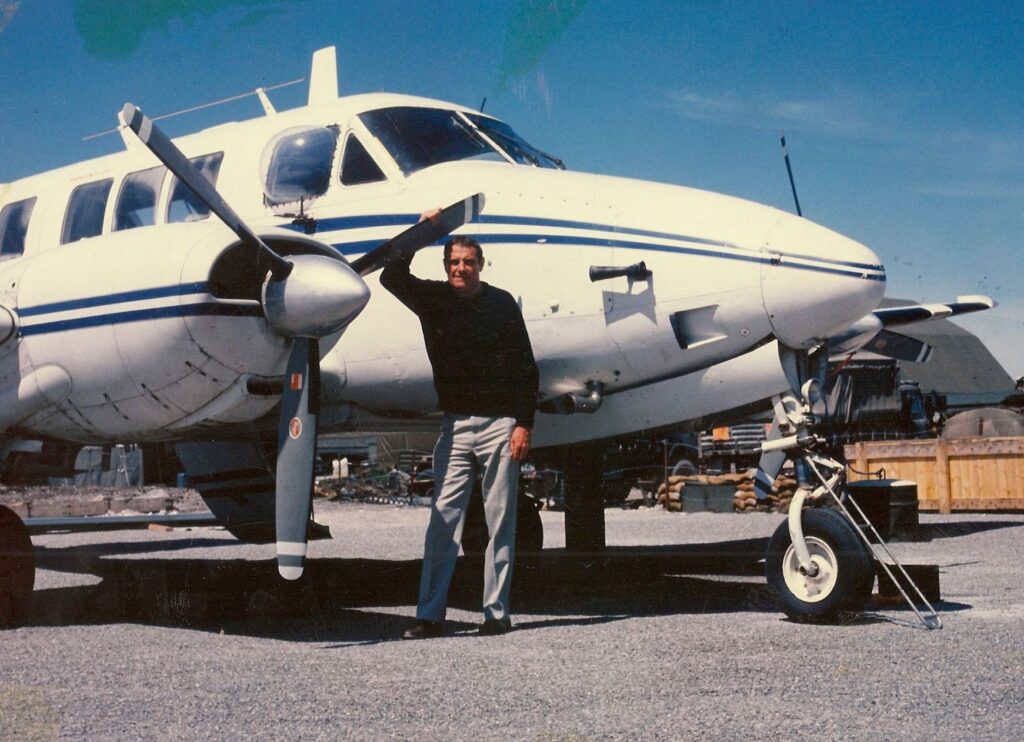
Port Stanley in the Falklands with Beechcraft Queenair

Sad news that Geoff Milsom has passed away. His son Chris called to say that Geoff died 9th September 2024, at Wexham Park Hospital after a stroke.

During WWII Geoff flew Spitfires and Hurricanes, starting out at age 18 in Burma. After the war he carried on flying, working for the Air Survey Company, which became Fairey Surveys and later Clyde Surveys. He was Chief Pilot for many years, and a brilliant survey pilot. The photograph above was taken during a survey in the Falklands for Mount Pleasant airport that was built in 1985 after the Falklands war.

In May there was a wonderful celebration at White Waltham Aero Club for Geoff’s 100th birthday, with family, friends and former colleagues all coming together to share the milestone, and enjoy a great party and great weather in a place that played a big part in his life.

The funeral was held on Friday September 27th 2024 at All Saints Church in Maidenhead, with the burial at Braywick Cemetery, where other family members are buried. The Maidenhead Advertiser published an obituary on September 19th. Read it here.

A few photographs from the day:

And the last post for Geoff Milsom, from the RAF. View the video here.

Geoff Milsom: 100th birthday 25th May 2024

What a milestone, and what a great party. (Good enough to get in the paper: online version here, and to be published in the Maidenhead Advertiser on Friday 31st May.)

Geoff celebrated his birthday where he was based for so much of his working life, White Waltham airfield, surrounded by family, friends and old Faireys. In tribute to the most senior old Fairey, the weather was wonderful, the planes were all flying, and the familiar scent of aviation fuel drifted across the grass. The West London Aero Club provided the food and drink, and the family provided the balloons.

There were quite a lot of family. Children, grandchildren, great grandchildren, cousins, second cousins, second cousins once removed …. Some were getting together for the first time in twenty years. But since Geoff spent most of his working life overseas, they probably haven’t seen very much of him over the years. And so much did he love flying, that when he came up to retirement age, he was owed about three years of accumulated leave!

One of the Hurricanes based at White Waltham was heading out to Duxford, and gave a pass by the airfield in homage to the occasion, to the delight of the crowd, especially the children.

A few pictures from the occasion – right click on the photographs for a full size image (select open in new tab):-

Dusty Miller got some good photographs, including some group photographs of the guests at the airfield fence while Geoff was looking at the Hurricane, and an excellent one of the cake.

John Cripwell RIP

Richard Cripwell has emailed to let us know the details of his father’s funeral:


The Memorial Service for John Cripwell will be held on Tuesday 12 March 2024 at St Edmund’s Church in Calne, Wiltshire at Noon. The address of the Church is:

Saint Edmund’s Catholic Church
Oxford Road
Calne
Wiltshire
SN11 8AQ

Please note that there is very limited parking near the Church but some is located reasonably close by.

The Cripwell family warmly invite everyone to join them, after the service, for tea and refreshments at The Pewsham SN15 3RU, between Calne and Chippenham. It is about a seven minute drive with plenty of parking.


News has been passed on by Lawrence Scott that John Cripwell died on 17th January 2024. John’s son Richard called Lawrence to let him know, and will pass on details of funeral arrangements when they are available.

John was born in Rhodesia on 8th January 1934, so he had just turned 90. He was a surveyor with Fairey Surveys from late 1965, and spent a lot of time overseas, as well as managing the FSL Dublin office for a time.

Ross Dallas sent in an article for the website about his time as a surveyor with FSL in the late 60s, with references to John during a job in Saudi Arabia. You can read it here.

The picture at the top is from a photograph taken at the 2004 reunion barbecue at White Waltham. For the full photograph, click here. He is also on the 2013 reunion photograph.